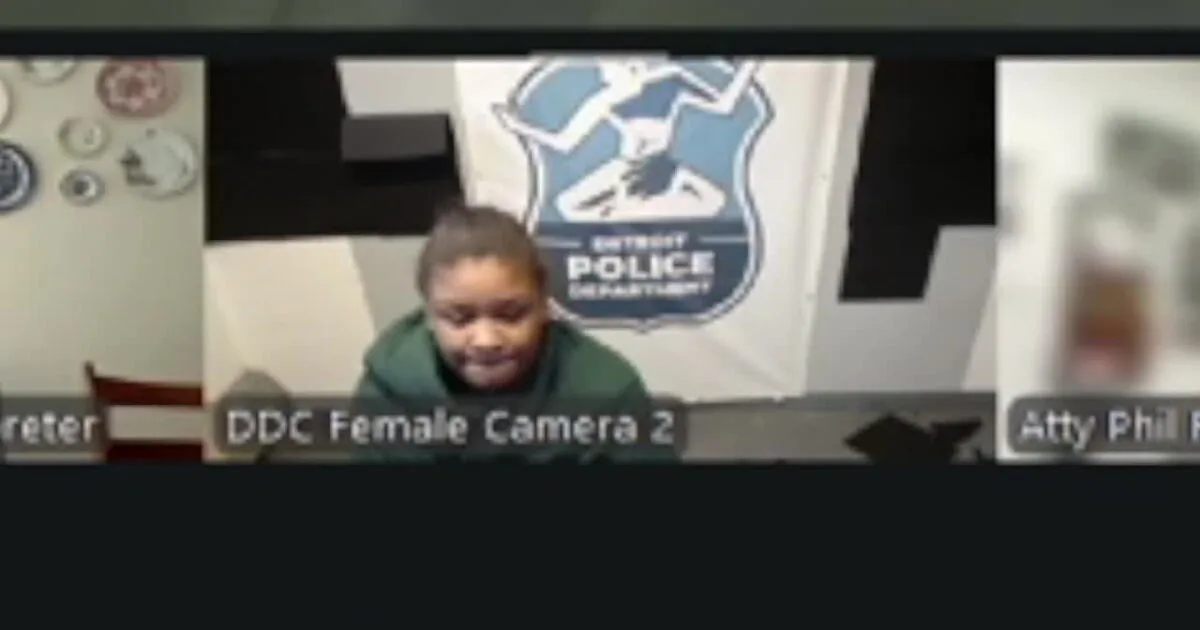
DETROIT, MI — A Detroit woman is facing a safe storage charge after prosecutors say her 2-year-old son found an unsecured handgun in a bedroom and shot himself in the stomach at their home. Amoya Black, 26, was arraigned in 36th District Court and was granted a $50,000 personal bond as the child recovers in stable condition.
The Facts
- What: Prosecutors say a 2-year-old boy got hold of an unsecured handgun and shot himself in the stomach.
- Where: The shooting happened at a home on Evergreen near I-96 in Detroit.
- When: Police and prosecutors said it happened Tuesday morning.
- Who: The child’s mother, Amoya Black, 26, was charged in the case.
- Charges: One count of Firearms – Safe Storage Violations – Premises Under Individual’s Control – Minor Present and Inflicted Serious Impairment of a Body Function Upon Self or Another.
- Status: Black was arraigned in 36th District Court and released on a $50,000 personal bond. The child is now stable, according to family.
What police say
Prosecutors say the handgun was not secured when the boy reached it inside Black’s bedroom. They said the child fired the weapon and suffered a gunshot wound to the stomach.
Court records and statements in court indicate bullet fragments were removed from the child’s stomach. Family members say the boy is doing much better and is now in stable condition.
The charge was filed under Michigan’s safe storage law, which is meant to hold gun owners responsible when a child gets access to a firearm that was left unsecured. In court, magistrate Delphia Burton said weapons kept in a bedroom still must be secured when children are in the home.
“It’s certainly very unfortunate that, your two year old ends up in the hospital as a result of just alleged negligence. And so even when weapons are in our bedrooms. They have to be secured, especially when there are children in the home,” Burton said.
The investigation
Detroit police and prosecutors are treating the case as a child-access shooting tied to alleged unsafe storage in the home. The central question in cases like this is whether the firearm was locked, unloaded, or otherwise kept out of reach of children, and whether the adult in control of the premises failed to meet the state law’s requirements.
Police have not said in the court account whether any other people were present when the shooting happened, and no additional injuries were reported. The case now moves through the district court process, where prosecutors must show probable cause before a preliminary exam can be held.
Michigan’s safe storage law has been used in several recent cases involving children and guns, according to comments in court and public safety officials. Detroit Police Chief Todd Bettison has also said the department plans community forums on gun safety, an effort aimed at preventing similar incidents.
What the charges mean
A safe storage charge is not the same thing as charging someone with intentionally shooting a child. Instead, it alleges that a gun owner or person responsible for the premises failed to secure a firearm when a minor was present, and that failure resulted in serious injury.
If prosecutors prove the case, the charge can carry a prison sentence of up to 10 years. A personal bond means the defendant was released based on a promise to appear in court rather than by paying cash bail to a jail or surety company.
At this stage, the charges are allegations. Black is entitled to a hearing, and prosecutors must present evidence before the case can move deeper into the court system. The defense can challenge whether the facts support the charge and whether the state can prove each element.
What happens next
Black is due back in court twice this month: for a probable cause conference on Nov. 12 and a preliminary exam on Nov. 18. Those hearings will help determine whether the case moves forward and on what timeline.
For now, the child remains in recovery and the case stays focused on how the handgun was stored inside the home and whether the legal requirements under Michigan law were met.
Have information on a crime? Contact local police or Crime Stoppers at 1-800-222-8477 (TIPS).