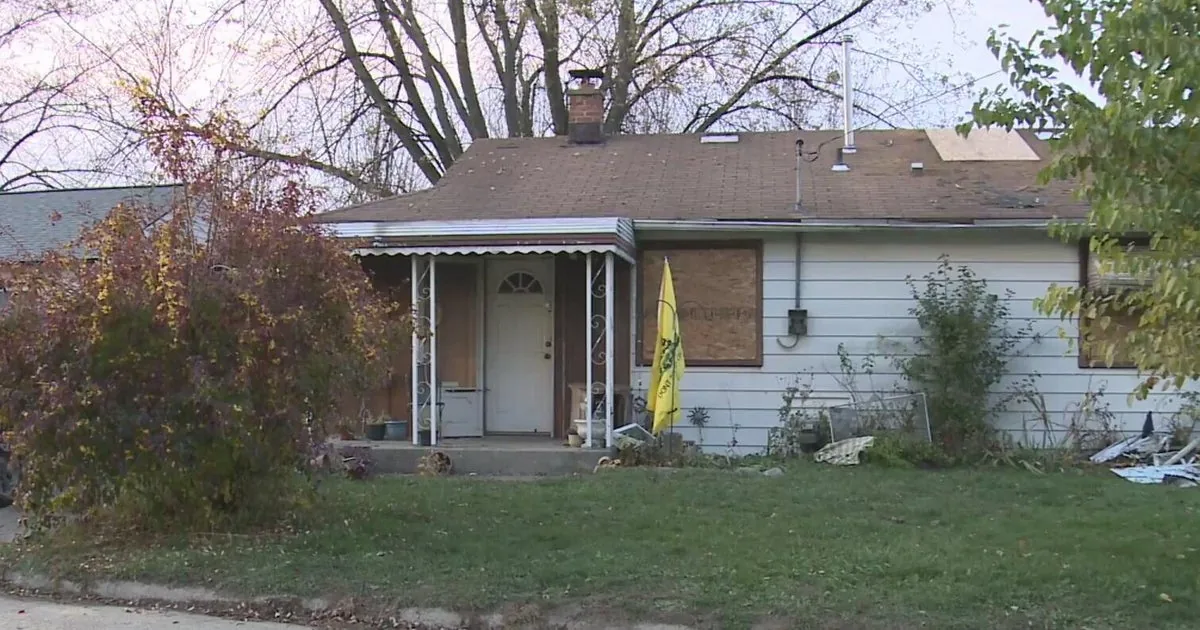
WESTLAND, MI — A Westland man is accused of killing his 79-year-old grandmother and then setting the family home on fire, according to Wayne County prosecutors. Donavan Shane Laverty, 33, was arrested at the scene and later charged in connection with the Nov. 11 death of Sandra Stanton.
The Facts
- What: Prosecutors say Donavan Shane Laverty fatally shot his grandmother and then set the home on fire.
- Where: A house in the 33800 block of Calumet Court in Westland.
- When: The shooting and fire occurred on the morning of Nov. 11.
- Who: The victim was Sandra Stanton, 79. The defendant is Donavan Shane Laverty, 33.
- Charges: Premeditated first-degree murder, second-degree arson, discharge of a firearm in a building and two counts of felony firearm.
- Status: Laverty was arrested at the scene and arraigned on Nov. 14.
What police say
Wayne County prosecutors allege Laverty fired a handgun several times inside the home and struck Stanton in the head. Investigators say he then poured an accelerant on boxes inside the house and set them on fire.
When officers arrived, smoke was coming from the home. Police said they could not get inside right away because of the smoke and flames.
The fire was put out and Stanton was taken to a local hospital, where she died of her injuries, authorities said.
“Domestic violence is one the most serious crimes,” Wayne County Prosecutor Kym Worthy said in a written statement. “I have said this before; it is extremely hard to protect yourself from the murderer that lives in the house with you.”
Neighbor Ben Lapinski told CBS News Detroit that Stanton was a kind person and that he had known her through conversations around the neighborhood.
The investigation
Police have not publicly detailed what led up to the shooting or what evidence they say supports the charges. In cases like this, investigators typically use statements from witnesses, the condition of the scene, physical evidence, and any forensic findings to piece together the sequence of events.
Because the fire was part of the alleged crime, investigators also have to determine how it started, where the accelerant was used, and whether the fire scene matches witness accounts and other evidence. Arson cases often require coordination between police, fire investigators and prosecutors.
The Wayne County Prosecutor’s Office said Laverty was arraigned Nov. 14. A probable cause conference is set for Nov. 25, and a preliminary examination is scheduled for Dec. 3.
What the charges mean
Premeditated first-degree murder is among the most serious homicide charges in Michigan. It alleges a killing was planned in advance, rather than happening in the heat of the moment. Prosecutors must prove their case in court, and the defendant is presumed innocent unless and until convicted.
Second-degree arson generally refers to intentionally setting fire to property under circumstances that make the offense less severe than first-degree arson, but still a felony. A discharge-of-a-firearm count and felony-firearm charges add separate allegations tied to the gun use.
Felony-firearm charges typically mean a gun was possessed or used during the commission of another felony. In Michigan, that charge can carry mandatory penalties if a conviction is entered, though the exact sentence depends on the outcome of the case and the court’s findings.
What happens next
The next hearing listed in the case is the probable cause conference on Nov. 25. That step is usually used to discuss the prosecution’s evidence, possible plea talks, and whether the case will move forward to the next stage.
If the case advances, the preliminary examination on Dec. 3 would give a judge a chance to hear enough evidence to decide whether there is probable cause to send the case on to trial.
Have information on a crime? Contact local police or Crime Stoppers at 1-800-222-8477 (TIPS).