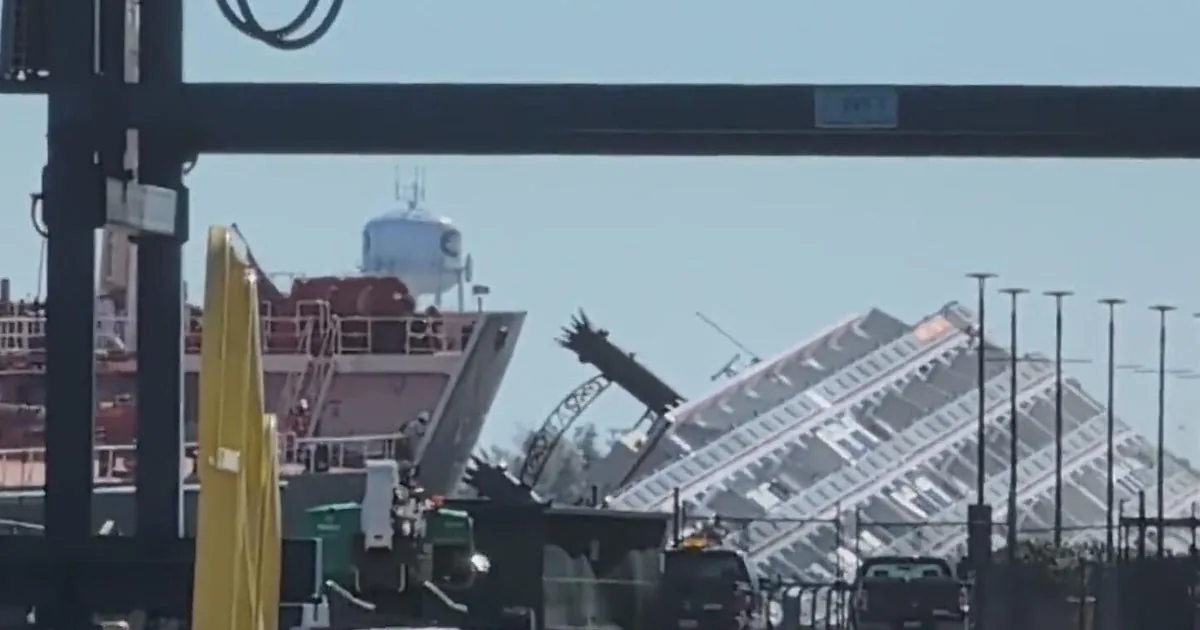
NEW ORLEANS, LA — A tanker identified as the Atlantic Asphalt crashed into a paddlewheel cruise boat docked at the Port of New Orleans around 12:30 p.m. local time, sending rescue crews to the scene. Port officials said the larger vessel struck the cruise boat while it was tied up at the dock.
The Facts
- What: A tanker hit a river cruise boat that was docked at the Port of New Orleans.
- Where: The collision happened at the Port of New Orleans in Louisiana.
- When: The crash occurred at about 12:30 p.m. local time.
- Who: The tanker was identified as the Atlantic Asphalt. Port officials described the other vessel as a paddlewheel cruise boat.
- Charges: No criminal charges have been announced.
- Status: Rescue efforts were underway after the crash.
What police say
The Port of New Orleans said the tanker collided with the cruise vessel while it was docked. The port did not immediately provide further details about how the crash happened or whether anyone was hurt.
In marine incidents, investigators typically look at the positions of both vessels, docking procedures, speed, communications, and whether mechanical problems or operator error played a role. Officials generally also review harbor records and statements from crew members and witnesses.
Because the cruise boat was tied up when the tanker struck it, investigators may focus on how the moving vessel approached the dock and whether the collision was avoidable. Any formal findings would come later, after the scene is documented and vessel operators are interviewed.
The investigation
When a crash happens in a busy port, responders usually work first to stabilize the scene and determine whether anyone needs medical help or evacuation. That can include checking the hulls of both vessels, accounting for passengers and crew, and making sure the dock area is safe.
Waterway collisions can also trigger reviews by port authorities and marine safety investigators. Depending on the outcome, that process can involve damage assessments, witness accounts, and records from onboard systems or harbor traffic logs.
The Port of New Orleans did not provide a tip line or public contact number in the information released with the crash details. If officials share one later, it is often used for witness statements, photos, or video that may help reconstruct the sequence of events.
What the charges mean
No charges were announced in connection with the collision. If a crash on the water leads to citations or criminal counts, the specific case can depend on what investigators find about negligence, rule violations, intoxication, or vessel operation.
In general, maritime incidents may be handled through port enforcement, civil claims, regulatory reviews, or criminal court if authorities believe a law was broken. A separate civil case can also follow if there is property damage or injury.
For readers, the key point is that not every collision becomes a criminal matter. Many are handled first as safety investigations, with any penalties or charges coming later if officials decide a legal violation occurred.
What happens next
The next step is likely a closer look at the damage, the movements of both vessels, and the condition of the port area after the crash. Officials may also release more information on whether anyone was injured and how the collision affected dock operations.
If investigators determine the incident involved a violation, they could announce enforcement action later. For now, the public information is limited to the time of the crash, the name of the tanker, and the fact that rescue work was underway.
Have information on a crime? Contact local police or Crime Stoppers at 1-800-222-8477 (TIPS).