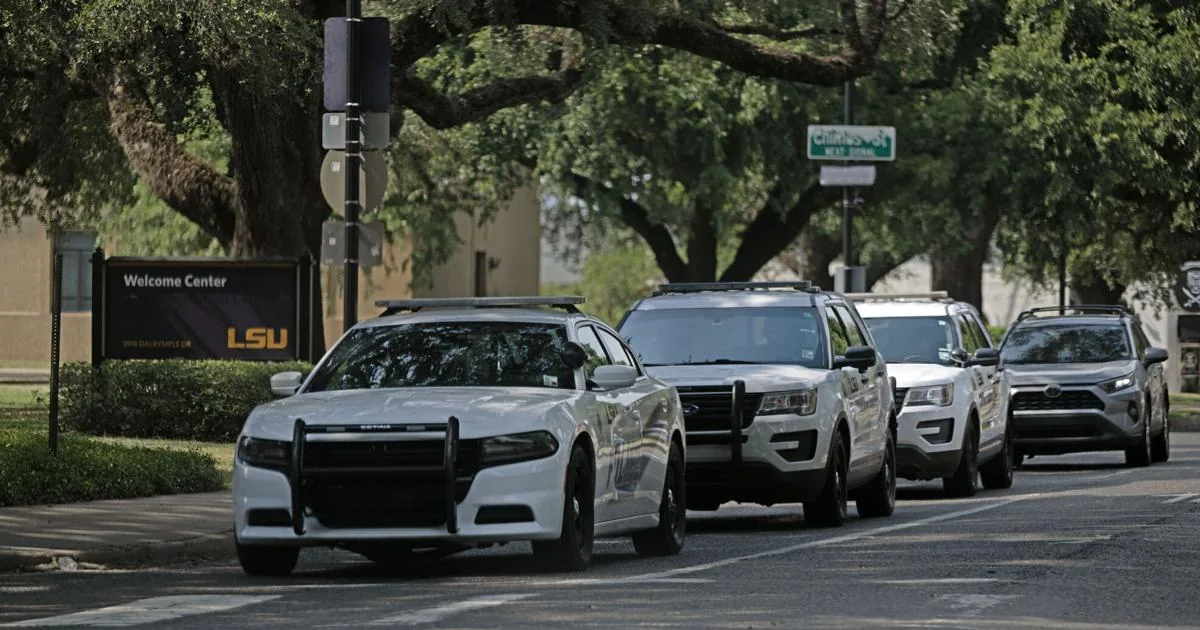
BATON ROUGE, LA — A former LSU employee was arrested Tuesday night after police say he sent bomb threats to multiple campus employees and claimed explosives had been placed in several buildings if he was not paid $20,000. The threats prompted a campus safety alert before LSU later gave the all-clear.
The Facts
- What: Police say Tayshawn Robinson sent false bomb threats tied to a demand for $20,000.
- Where: Louisiana State University in Baton Rouge, including the library, Patrick F. Taylor Hall and areas along Highland Road.
- When: The threats went out Tuesday evening, with LSU issuing an alert about 7:45 p.m. and lifting it around 9 p.m.
- Who: Tayshawn Robinson, 22, a former LSU Facility Services employee.
- Charges: Communicating false information of a planned bombing on school property and possession of marijuana.
- Status: Robinson was arrested and booked into East Baton Rouge Parish Prison.
What police say
According to arrest documents, Robinson used a fake phone number to contact several LSU employees, building supervisors and staff members. Investigators say the messages warned of bombs in different campus locations and linked the threats to a demand for money.
Police say deputies traced the bogus number back to Robinson through an email address connected to the account. When officers arrested him, they say he had a two-gram bag of marijuana with him.
During questioning, Robinson first denied involvement, according to the arrest paperwork. Police say he later admitted sending the messages through a texting app after being confronted with evidence.
The investigation
LSU sent out a safety alert after the threats surfaced, telling students to be cautious and to report anything suspicious to police. The university later said it had cleared the campus after the warning period passed without a reported explosion.
Cases like this often hinge on digital records, and police said they were able to connect the fake number to an email address. Investigators commonly use phone logs, app data and account information to identify where threatening messages came from.
When a bomb threat is reported, officers typically work to confirm whether there is any real danger, search the locations mentioned and try to identify the sender quickly. Tips from employees, students and the public can help speed that process, especially when threats target a campus or other crowded place.
What the charges mean
Communicating false information of a planned bombing is a serious felony-style accusation under Louisiana law. In plain terms, it means prosecutors believe someone knowingly made a bomb threat that caused alarm, even if no device was found.
A separate marijuana possession charge can be added when officers say a suspect had illegal drugs during the arrest. Each count is handled on its own, and a defendant can face different outcomes on each charge depending on the evidence and any plea or trial result.
After an arrest, the case typically moves through booking, charging and a first court appearance. Prosecutors then decide how to proceed, and defense attorneys can challenge the evidence, the statements made to police or the way the investigation was conducted.
What happens next
Robinson was booked into parish prison after the arrest, and the case is expected to move into the court system from there. Any further hearings would normally address bail, formal charging decisions and the schedule for later proceedings.
Officials have not said whether investigators believe anyone else was involved in the threats. For now, the case centers on the messages police say were sent, the campus response they triggered and the digital trail that led officers to Robinson.
Have information on a crime? Contact local police or Crime Stoppers at 1-800-222-8477 (TIPS).