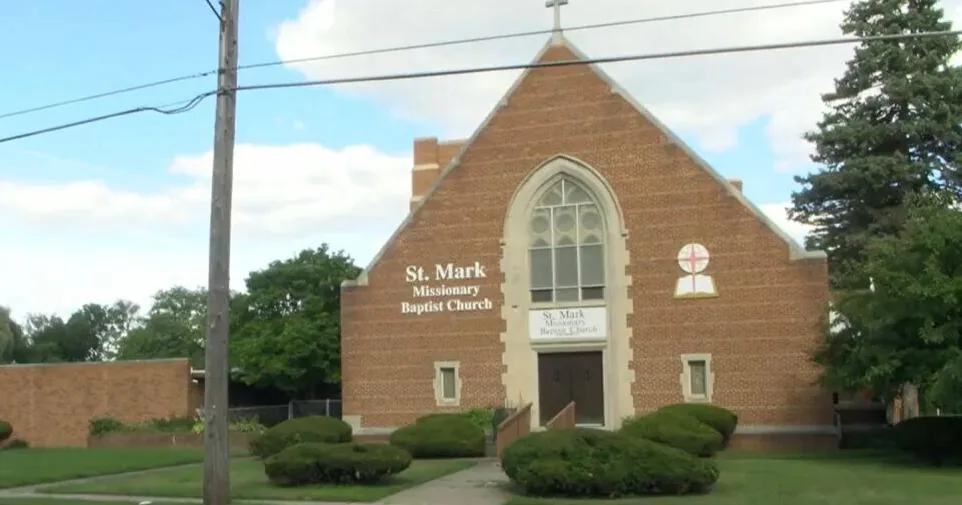
FLINT, MI — A federal judge on Tuesday denied a bid to release Billy Chambers from custody while he awaits trial in the arson case tied to St. Mark Missionary Baptist Church in Flint. The hearing brought church members to court more than a year after the fire, which prosecutors say caused heavy damage to the building.
The Facts
- What: A federal judge denied a request to release Billy Chambers before trial in the St. Mark Missionary Baptist Church arson case.
- Where: U.S. District Court in Flint, Michigan.
- When: Tuesday afternoon, more than a year after the Aug. 30, 2025, fire.
- Who: Billy Chambers, and Flint woman Sonja J. Settles, were previously charged in connection with the church fire.
- Charges: Chambers has been charged with arson-related offenses and being a felon in possession of ammunition. Settles has been charged with being a felon in possession of a firearm.
- Status: Judge Frances Kay Behm denied the defense request for pretrial release, and Chambers remains detained.
What police say
Court records say Chambers walked to the church from a nearby field shortly after 2 a.m. on Aug. 30, 2025, broke a window, then returned with gasoline and materials used to start the fire. Prosecutors allege he poured gasoline through the broken window before igniting it.
Investigators cited phone records showing Chambers and Settles communicated before and after the fire. Authorities also said both of their phones connected to towers near the church around the time of the blaze.
At the hearing, Pastor Kevin Thompson said seeing surveillance video of the fire was painful for church members. He said flames poured out of one room and left the space unrecognizable.
“I finally saw it again, and it was triggering. It was unimaginable. You can’t really explain the feeling of seeing the church being burnt,” Thompson said.
The fire damaged the church on Dupont Street and left the congregation with a large loss. Assistant United States Attorney Anthony Vance said the damage was estimated at $350,000.
The investigation
Federal prosecutors and investigators have relied on surveillance video, phone records and tower connections to build the case, according to information discussed in court. Those kinds of records can help investigators place people in the same area at the same time and compare that with witness statements or video evidence.
In arson cases, investigators often look at where a suspect was seen before and after the fire, how the fire started, and whether accelerants or other materials were used. They also work to preserve physical evidence from the scene and match it against digital records and any available video.
Supporters filled the courtroom for the hearing, reflecting the impact the fire had on the congregation and the church’s outreach work. No tip line was mentioned in the court hearing coverage.
What the charges mean
A federal detention hearing decides whether a defendant should remain locked up while the case moves forward. Judges consider the risk of flight, the possibility of danger to the public, and whether conditions such as home confinement or a tether could reasonably keep the community safe.
When a judge denies pretrial release, the defendant stays in custody unless a later order changes that status. That does not decide guilt or innocence. It only addresses whether the person should be held while the prosecution continues.
The separate weapons charges also matter because federal law prohibits certain people, including convicted felons, from possessing firearms or ammunition. Those counts can add to the seriousness of the case even as the arson allegations remain the central focus.
What happens next
Chambers is scheduled to return to court Feb. 2. Additional hearings are likely as the case moves toward trial and the court continues to handle detention and other pretrial issues.
Settles’ case remains separate but connected through the same overall investigation. Any future court action could address motions, evidence and scheduling before jurors ever hear the case.
Have information on a crime? Contact local police or Crime Stoppers at 1-800-222-8477 (TIPS).