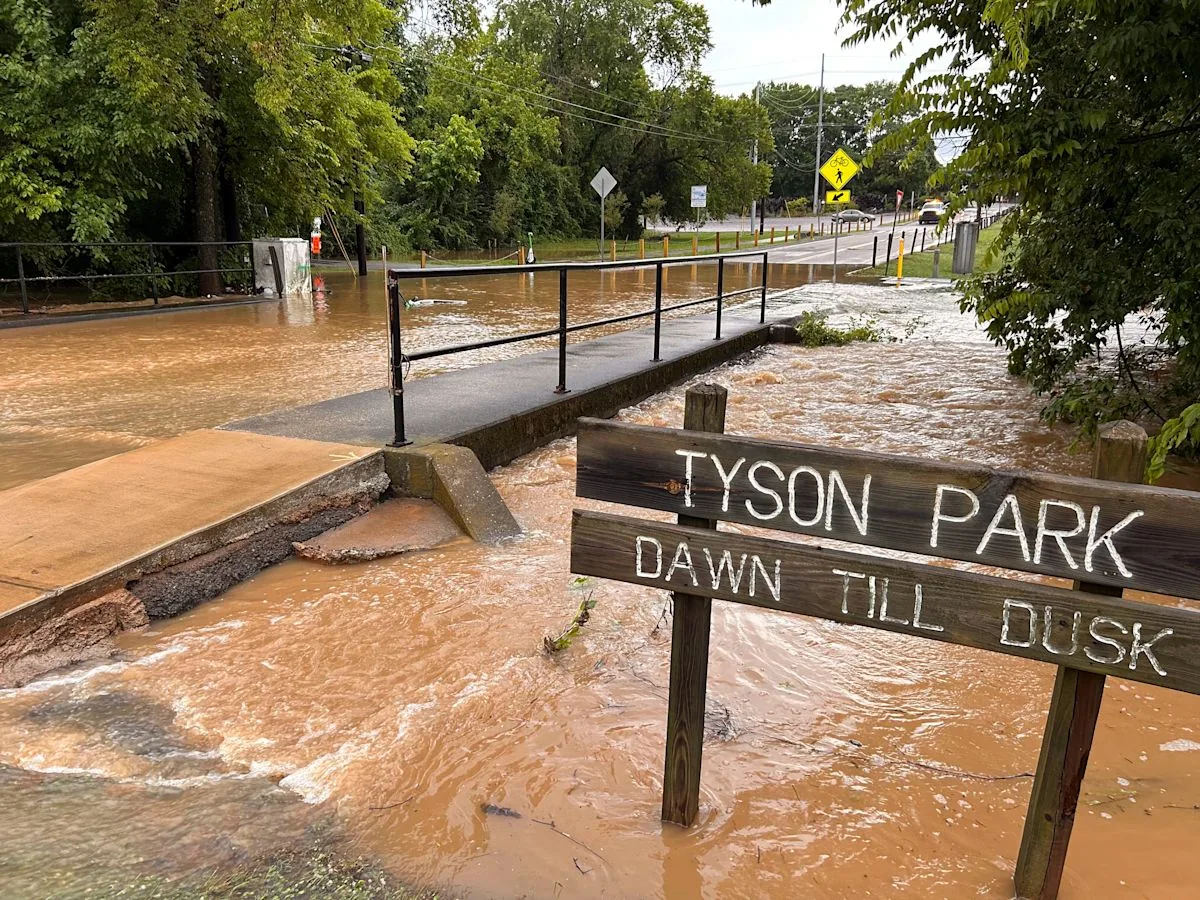
KNOXVILLE, TN — Knoxville property owners could face a new stormwater user fee under a city study that says the system needs about $850 million in upgrades. City officials discussed the proposal at a Nov. 19 Knoxville City Council workshop after recent flooding put fresh attention on aging pipes, runoff problems and repeat street flooding.
The Facts
- What: A city study recommends a stormwater user fee to help pay for about $850 million in needed upgrades.
- Where: Knoxville, where city officials discussed the plan at a City Council workshop.
- When: The study was discussed Nov. 19, after recent flooding and during 2026 flooding incidents.
- Who: Knoxville property owners, including residential, commercial and tax-exempt properties, could be billed under the proposal.
- Charges: The study says large commercial properties could pay about $1,520 to $2,432 per month, residential properties about $5 to $8, and tax-exempt properties about $90 to $144.
- Status: The fee is only a recommendation for now and would require a city ordinance and staff support before it could begin.
What police say
This is not a criminal case, but city officials and the study say Knoxville’s stormwater system is under strain. The plan is tied to repeated flooding and a network of pipes that the study describes as aging and in need of major attention.
The study identified 610 pipes in poor or failing condition and 6,920 more that are nearing failure. It also listed 4,600 pipes that still need assessment, showing the scope of the work city leaders may have to address.
According to the study, a user fee could raise $12.8 million in its first year. The city says similar fees are already used in Chattanooga, Johnson City, Memphis and Nashville.
City leaders also discussed how such a fee might affect renters, including whether property owners would be billed instead. No final decision was reported after the workshop.
The investigation
The city study points to street flooding, traffic delays and sinkholes as likely consequences when stormwater infrastructure is outdated or fails. It says more costly repairs and more disruptions are likely if Knoxville does not find a new funding source.
The proposal would tie monthly charges to how much runoff a property creates, using roof size and paved surfaces such as driveways and parking lots. Under that model, a grocery store or warehouse with a large paved footprint would likely pay more than a small house.
The plan would not start immediately. City officials would need to approve an ordinance, hire staff to run the program and notify property owners before the first bill goes out.
What the charges mean
A stormwater user fee is not a fine or a penalty. It is a utility-style charge meant to help pay for drainage systems, pipes and related infrastructure that manage rainwater and runoff.
In practice, cities often base these fees on how much hard surface a property has, because roofs, parking lots and driveways keep water from soaking into the ground. More runoff usually means more strain on drains, pipes and channels.
For property owners, that means the bill can vary widely. A home with a small roof and little paved area would generally pay far less than a shopping center, office building or warehouse.
Tax-exempt owners such as churches and nonprofits can still be included in stormwater fee programs because the charge is tied to service use, not property tax status. Whether landlords or renters ultimately bear the cost usually depends on local billing rules and lease arrangements.
What happens next
The proposal now moves through Knoxville’s local decision-making process. If the City Council wants to proceed, members would need to approve the ordinance and set up the staffing and billing structure needed to launch the fee.
Before any charge appears on a bill, the city would also have to notify property owners. Until then, the recommendation remains part of the discussion over how Knoxville will pay for its stormwater needs and reduce future flooding problems.
Have information on a crime? Contact local police or Crime Stoppers at 1-800-222-8477 (TIPS).