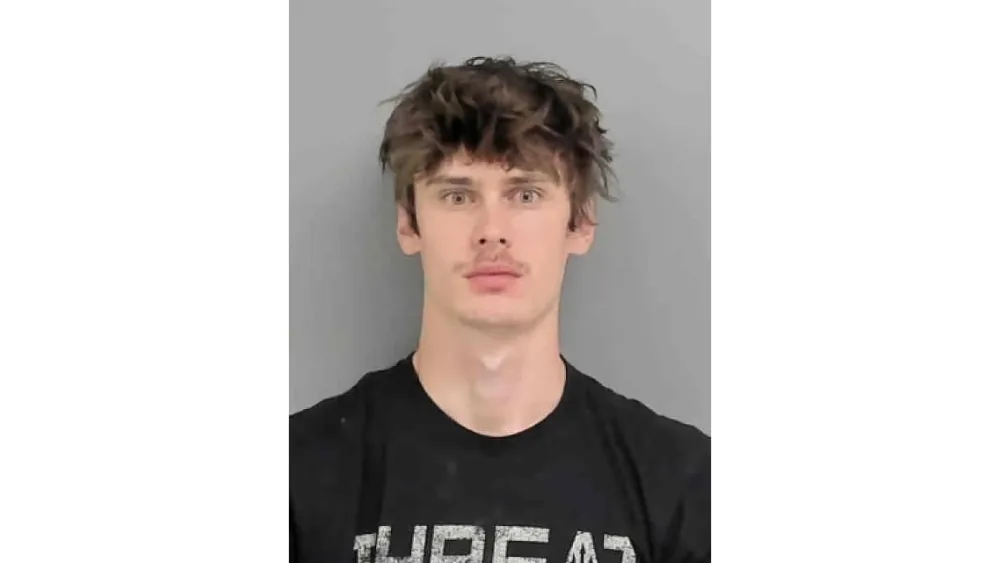
KNOXVILLE, IA — An Oskaloosa man has been arrested in Marion County on two felony counts of sexual abuse of a child and a misdemeanor charge of distributing obscene material to a minor. Court records say the case involves a 15-year-old victim and alleged sexual contact in Knoxville between April and July 2026.
The Facts
- What: Authorities say Jayden Kennedy was arrested on two Class C felony counts of sexual abuse of a child and one misdemeanor count of distributing obscene material to a minor.
- Where: The allegations were reported in Knoxville, and the case is being handled in Marion County.
- When: The conduct described in court records is said to have occurred from April through July 2026.
- Who: The victim is identified in court records as a 15-year-old. Kennedy is from Oskaloosa and is described as being more than four years older than the victim.
- Charges: Two Class C felonies for sexual abuse of a child, plus a misdemeanor for distributing obscene material to a minor.
- Status: Kennedy has been arrested, according to the court records referenced in the case.
What police say
Court records say a report was made to the Knoxville Police Department involving the teen and Kennedy. Investigators say the victim and Kennedy had sexual contact on multiple occasions in Knoxville during the period named in the complaint.
According to the complaint, the victim’s parents said they told Kennedy the victim’s age soon after the two met in person. The records also say the victim told investigators Kennedy sent videos of sexually explicit acts during the same time frame.
Police said they had consent to search the victim’s phone. Investigators then obtained a warrant to search Kennedy’s phone, where they found a sexually explicit video that matched one on the victim’s phone.
The investigation
In cases like this, detectives typically compare statements from the alleged victim, digital messages, and media found on phones or other devices. A search warrant gives investigators legal authority to review content that may help confirm whether alleged communications, images, or videos were exchanged.
Digital evidence often matters because phones can preserve timestamps, files, and message histories that help investigators build a timeline. When a complaint involves a juvenile, officers also work with care to limit further contact and document the evidence for prosecutors and the court.
If police seek additional information from the public, they usually direct tips through the investigating agency. In this case, the information made public names the Knoxville Police Department as the agency that received the original report.
What the charges mean
A Class C felony in Iowa is a serious charge that can carry substantial prison time if there is a conviction. The specific sentence depends on the facts of the case, the evidence, and any prior criminal history, along with decisions made by the court after the case is filed.
The misdemeanor charge adds a separate allegation that obscene material was provided to a minor. In criminal cases, a charge is not a finding of guilt. Prosecutors still must prove the allegations in court, and the defendant has the right to enter a plea and contest the case.
After an arrest, cases usually move through initial court appearances, bond decisions, and later hearings where evidence is reviewed. If a plea agreement is not reached, the matter can proceed toward trial.
What happens next
Kennedy’s next court steps were not included in the records made public with the arrest information. In most felony cases, the court will later set deadlines for arraignment and other proceedings.
Prosecutors may continue to review the phone evidence and witness statements as the case moves forward. Any future hearing dates will determine how the charges are handled in Marion County court.
Have information on a crime? Contact local police or Crime Stoppers at 1-800-222-8477 (TIPS).