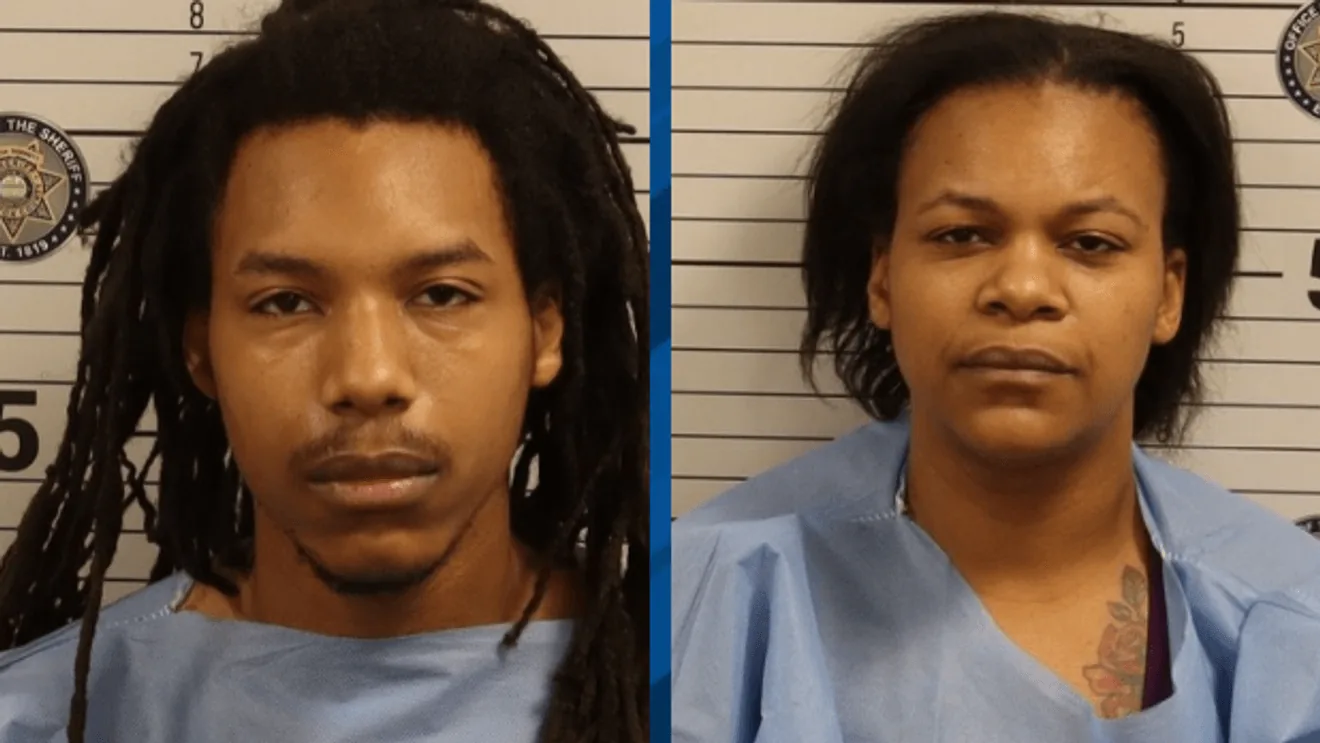
CHATTANOOGA, TN — A Chattanooga man is facing first-degree murder and evidence-tampering charges in the deadly shooting of Jeremiah Lewis, and his mother is also charged in connection with the killing, according to court affidavits. Police say 24-year-old Qence Burgess and 44-year-old Jessica Williams were tied to the case after investigators reviewed video, interviewed Burgess and collected physical evidence.
The Facts
- What: Qence Burgess is charged with first-degree murder and tampering with evidence in the killing of Jeremiah Lewis. Jessica Williams is charged with facilitating first-degree murder.
- Where: The shooting happened on Roanoke Avenue in Chattanooga.
- When: Officers responded on Nov. 17 to a report of a dead person; affidavits say the shooting happened the night before.
- Who: Police identified the victim as Jeremiah Lewis, and the defendants as Burgess and his mother, Jessica Williams.
- Charges: Burgess faces first-degree murder and tampering with evidence. Williams faces facilitating first-degree murder.
- Status: The case is in the court affidavit stage, with investigators saying video and physical evidence supported the charges.
What police say
According to the affidavits, officers found Lewis with multiple gunshot wounds after answering a call about a dead person on Roanoke Avenue. Investigators later said they reviewed security video that captured the shooting and the events around it.
The affidavits say the video showed a suspect getting out of a white Chevrolet Equinox, hiding near the scene and then chasing Lewis while firing. Police say the shooting continued after Lewis fell from his bicycle, and the SUV later returned to pick up the suspect.
Investigators identified the vehicle as one registered to Williams, according to the court filings. In an interview, Burgess allegedly admitted he shot Lewis after believing Lewis had taken his firearm.
Police also say Burgess told detectives Williams gave him firearms and drove him while they searched for Lewis. He allegedly admitted cleaning the firearms after the shooting.
The investigation
Investigators said they were able to match Burgess’s account with surveillance video and physical evidence. In cases like this, that kind of combination can matter because video can help place a suspect, a vehicle and the timing of events together in one sequence.
Courts often rely on affidavits at the charging stage to explain why police believe probable cause exists. Those documents can summarize witness statements, video, recovered items and a suspect’s own admissions, even before the case reaches trial.
The affidavits do not mention an outstanding suspect or a public tip line. For now, the case appears to be moving through the normal criminal process as detectives and prosecutors continue to build the file.
What the charges mean
First-degree murder is among the most serious charges in Tennessee. It generally means prosecutors believe the killing was intentional and meets the legal definition for the highest level of homicide charge.
Tampering with evidence is a separate felony charge. In general, it covers conduct meant to hide, destroy or alter items that could matter in a criminal investigation or court case.
A charge of facilitating first-degree murder means prosecutors believe a person helped or encouraged the killing without necessarily being the person who fired the shots. The exact proof has to be tested in court, and the state still must prove its case beyond a reasonable doubt.
What happens next
At this stage, the affidavits outline allegations, not a final verdict. The defendants would normally move through court proceedings that can include arraignment, bond questions and later hearings on the evidence.
If the case proceeds, prosecutors will have to present the video, physical evidence and witness statements they say support the charges. Defense lawyers can challenge that evidence and argue for their clients in court.
Have information on a crime? Contact local police or Crime Stoppers at 1-800-222-8477 (TIPS).